
One Shoot Day. Three HCP Video Formats. How Pharma Agencies Are Maximizing the Hospital Set.

Less than 20% of HCPs find pharma video content personalized to their needs. One brief might contain multiple end-points. Medical Affairs need a 2-minute education piece for the detail visit, and Brand wants a 30-second CTV cut and Digital is asking about how many vertical socials and stills they can wring out of those first two.
Four formats which have historically been multiple shoots, different budgets, talent & location fees, four rounds of compliance sign-off, but it doesn't have to work that way.
We built the hospital so you don't have to- multiple set configurations.
What You're Actually Up Against on a Real Hospital Location
Shooting in an actual hospital is the obvious first instinct. The environment is real and the clinical detail is authentic, but in practice it rarely works.
Hospital shoots operate on the facility's schedule, with narrow access windows, visiting hours, and patient emergencies that can sideline a produciton with no notice. The art department can't touch or alter anything, and the shot background is whatever the hospital looks like that day. Compliance reviews the stills after the fact, which could trigger rejection, VFX fixes or reshoots.
That's before you factor in the second or third specialty.
What Modular Actually Means on a Virtual Production Stage
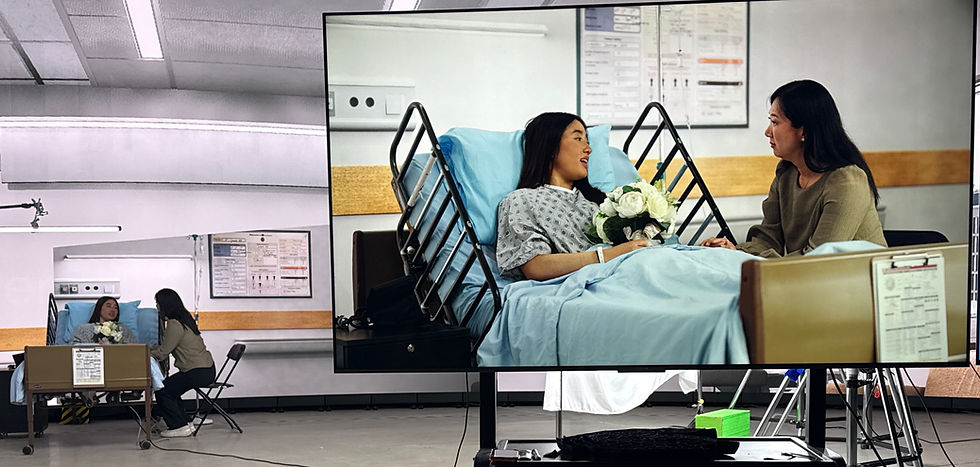
The Unreal Engine hospital set is assembled in pre-production, with the ward bay, consultation room, pharmacy counter, corridor you need to shoot in.
Each environment is a discrete module with minimal physical production design that helps sell the VP conceit. between setups you're not striking a set and building another one, moving lights and camera to a new location, you're loading a different room onto the LED wall in minutes. What has changed is the clinical context behind them, but the lights and scene setup maintain consistency.
The background plates are specialty-specific, so the equipment visible in an oncology ward is different to the cardiology unit, and that detail is adjustable without touching a physical prop. Lighting is saved as a state and recalled. The vertical frame is composed for 9:16 from the start, not cropped from the wide as a compromise. Signage and wayfinding in the background are live text, so the environment can read as a specialist centre for one cut and a community clinic for the next without a redressing the set.
On a real hospital location, none of that is true. You get the room as it is, the light as it falls, and the signage bolted to the wall. For a single format shooting a single specialty, that's manageable but for three specialties across four formats, it's three separate shoot days.
What You Can Actually Produce In One Day on a VP Volume:
2-Minute HCP Education Video. Condition-specific, specialty-specific, built for the detail visit and medical affairs channel. The physician or NP speaks directly to camera in an environment that reads as clinical and clean.
30-Second CTV Cut. Same talent, same light setup, and a tighter script written into the shot list from day one, not reverse-engineered from the education video in the edit suite. We can pivot and move around the hospital rooms we've established without moving the camera or the lights. You're now ahead of schedule.
Vertical Social Cut. Reframed 9:16 for LinkedIn and Instagram Reels, these 15 second, role-specific, specialty-specific videos are scheduled for the week you're targeting that audience. Because you've framed everything you can to protect for 9:16, most shots can be pulled into vertical social.
Still Library. Frame pulls and dedicated still shoots between setups gives you specific imagery at marginal additional cost.
The Personalization Gap Is a Production Gap
HCPs are saying they don't feel seen and the agency response has largely been strategic, trying better segmentation, smarter messaging and more granular audience definitions, which is the correct approach to better understand the clients. But the content itself hasn't changed, where you are still producing one video, one cut, distributed broadly.
The reason is straightforward: Condition-specific and specialty-specific shoots and cuts aren't economically viable if every variation requires its own shoot day. The budgets don't support it, so the personalization stays in the brief and doesn't make it to screen.
A pharma agency running a launch across oncology, cardiology, and nephrology would typically plan three separate shoot days to maintain clinical credibility across each audience. One virtual production day can cover all three. The shooting environment is well lit and consistent. Background assets are specialty-appropriate and have already been reviewed and approved by Compliance. Post Production have clear format deliverables, and the footage to get everything done. Twelve deliverables from one shoot.
The Brief Hasn't Changed. The Execution Has.
The >20% personalization stat doesn't move through better planning. It moves when the production model can actually deliver what the strategy is asking for: a controlled environment, one shoot day, and all the formats and specialty cuts your omnichannel plan needs.
XCrazy Studios operates a virtual production stage in New Jersey with a built hospital and pharmacy environment available for single-day and multi-day pharma and healthcare shoots. We can also build you anywhere your imagination can take you.
Enquiries: info@xcrazystudio.com

Comments