
Forget Sci-Fi. Virtual Production Is Built for Campaign Production.

The real value isn’t fantasy. It’s control, repeatability, and making your day.
Forget sci-fi. The best case for virtual production is not giant fantasy builds or flashy world-making, it is campaign production that has to run to schedule, repeat consistently, and scale to multiple deliverables over time.
Commercials, branded spots, pharma, healthcare, product, social and agency projects are where this starts to make real sense. In this world, the value of VP is not unlimited possibility, but rather the ability to plan more of the job, repeat it reliably, and execute without the day getting away from you.
Why Campaign Work Is the Right Fit
That is why campaign production is such a strong fit. These jobs are not just about one hero image, it's about building a system that can keep producing usable work over a whole campaign without having to reinvent itself every time.
One campaign can mean multiple spots, cutdowns, pickups, alternate versions, and message changes that all need to feel internally consistent with the whole campaign.
The real strength of VP shows up when it stops being treated like a trick and starts being used like a system. Once the workflow is up and running, the crew gets dialed in, handoffs get cleaner and resets get faster. People know where the friction is and how to stay ahead of it. By the time you are moving through multiple spots or deliverables, the whole process is getting more dialed in and realizing further gains.
On a one-off shoot, that learning may only help for a day. In campaign production, it compounds.
The Asset Is Not Just the Environment
A virtual environment, scene build, or visual setup should not be treated like a one-off cost tied to one shoot. Its value changes when it can be used and reused across multiple pieces of work built on the same creative logic. The more frequently those assets come back into play, the more the upfront build cost gets spread across a larger body of work.
But the asset is not just the environment. In campaign production, the system built around it starts carrying value too. Team confidence grows with the process. The workflow gets proven under pressure. For a producer, that means faster time to market, more output from the same setup, and a system that can carry into the next campaign instead of being rebuilt from scratch.
This is when the VP studio starts looking less like a special expense and more like a reusable production asset.
If You Can Get It In-Camera, You Can Deliver It
There is also a bigger production point underneath all of this: if you can get it in-camera, you know you can deliver it. Post matters, but it is a bad place to hide production problems, and in campaign work, that pain can multiply. The same unresolved issue can come back across versions, formats, and deliverables, and the post team is expected to carry a problem that should have been handled earlier. When more problems are solved on the day, the team can see it, the client can respond to it, and changes can happen while the job is still live. That does not eliminate post, but it does mean you are not leaving the whole thing for a post rescue later, with potential to affect the delivery schedule.
This is especially true in the kind of work that happens in New Jersey.
Automotive benefits from controlled environments, repeatable hero setups, and fewer location variables.
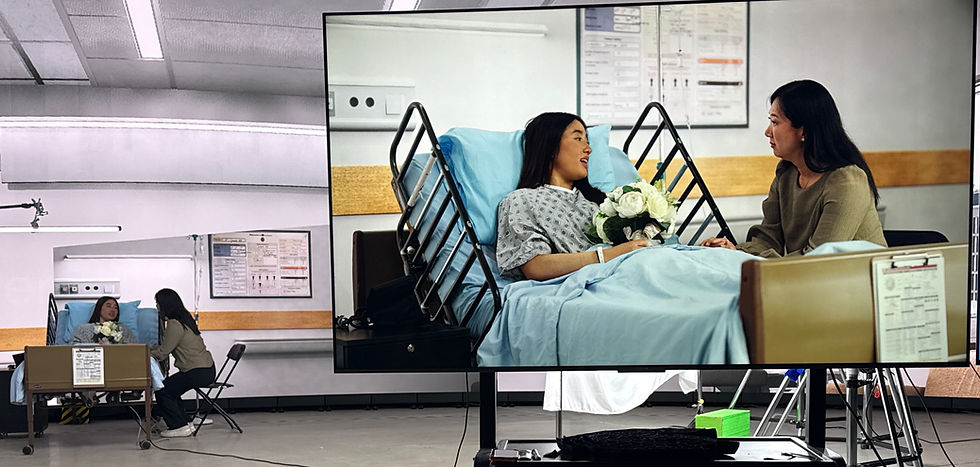
Pharma and healthcare benefit from continuity, versioning, approved looks, and the ability to come back to the same visual logic without starting over.
Branded and repeatable agency work are a fit for the same reason: multiple deliverables, message variations, and a production day that still has to stay under control.
None of this means VP is right for every job. Not every shoot has enough repetition to justify the setup, and not every concept needs this kind of workflow. But when the work has to scale, when the crew benefits from repetition, when the assets can be reused, and when getting more of the job in-camera gives you more confidence in delivery, the fit gets pretty obvious.
The best VP jobs are not always the flashiest ones. They are the ones where the production system matters — where control, repeatability, asset reuse, and making your day matter more than spectacle.
Forget sci-fi. Virtual production is perfect for campaign production.
Shooting in NJ? Come see the stage — book a private tour: xcrazystudio.com/book-a-tour

Comments